
Choosing the perfect diamond involves more than just picking out a sparkling stone. Many buyers want to understand how carat weight affects the look, feel, and value of their diamond. While carat weight is often the first detail people notice, it is only part of the story when it comes to how impressive a diamond appears.
The relationship between carat weight and diamond appearance can be surprisingly complex. Two diamonds with the same carat weight might look very different in size or presence depending on their shape, cut, and setting. With so many choices available in today’s market, it is easy to feel uncertain about what carat weight really means for your ring or jewelry.
This guide will break down the science and art behind carat weight, showing you real-life examples and practical tips to help you make a confident decision. By understanding how carat weight interacts with shape, setting and budget, you can find a diamond that truly stands out for you.
What Is Carat Weight?

Carat weight is one of the most important factors used to describe a diamond. When you hear someone talk about a one-carat diamond, they are referring to the weight of the stone, not its size or appearance. The term carat comes from the seeds of the carob tree, which ancient traders once used as natural weight standards because of their remarkable uniformity. Today, the carat is a universally accepted metric in the jewelry world.
One carat equals exactly 0.2 grams, which is about the weight of a paperclip. Diamonds are weighed to the hundredth of a carat using highly precise electronic scales. Even a small difference in carat weight can affect a diamond’s value. For example, a diamond weighing 0.99 carats can be priced very differently from a diamond that hits the one-carat mark, even if their size appears nearly the same.
Carat weight is often confused with diamond size, but the two are not the same. Two diamonds with the same carat weight might look different in size depending on their shape and how they are cut. Some cuts spread more of the weight across the surface, making the stone look larger, while others carry more weight below the surface, making the diamond appear smaller when viewed from above.
Understanding carat weight is crucial for buyers because it affects price, value, and the overall look of a ring or piece of jewelry. Jewelers and diamond dealers use carat weight as a baseline for pricing and it is one of the famous “4Cs” alongside color, clarity and cut. Each of these characteristics works together to determine a diamond’s beauty and worth.
It is common to see diamonds listed in points as well as carats. One carat equals one hundred points, so a diamond weighing 0.75 carats may also be described as a seventy-five-point diamond. This system makes it easier to discuss small differences in weight, especially for stones under one carat, where each point can impact value.
When choosing a diamond, it is important to consider how carat weight fits into your priorities. Some buyers focus on reaching a specific carat weight, while others look for the best combination of size, sparkle, and price. By understanding what carat weight means, you can make smarter choices and find a diamond that matches your style and budget.
Why Carat Weight Does Not Equal Diamond Size
It is easy to assume that a higher carat weight always means a bigger diamond, but this is not always true. Carat weight measures the mass of a diamond, not its actual size as it appears when set in jewelry. Two diamonds with the same carat weight can look noticeably different in size when viewed from above, especially if they have different shapes or proportions.
The way a diamond is cut plays a huge role in how large it appears. A well-cut diamond will have more of its weight distributed across the top surface, or table, which is the part you see when looking straight at the ring. Some diamonds are cut deeper, so more of the weight is hidden in the lower part of the stone, making the diamond appear smaller despite having the same carat weight as a shallower cut.

Shape also matters. Round diamonds are known for their classic look but often appear slightly smaller face-up than fancy shapes like ovals, pears, or marquises of the same carat weight. This happens because some shapes have a longer or wider outline, spreading the carat weight in a way that creates the illusion of a larger stone. That is why some buyers choose alternative shapes to maximize the perceived size of their diamond.
Understanding the difference between carat weight and face-up size can help you make a smarter choice. Instead of focusing only on the number, pay attention to the diamond’s measurements in millimeters and how the cut and shape influence what you see. This approach ensures that you get a diamond that not only matches your carat preference but also delivers the look and presence you desire.
Comparing Diamond Shapes: Which Looks Biggest Per Carat?
Not all diamond shapes appear the same size even when they share the same carat weight. The outline and proportions of each shape can create very different visual effects. For example, a round diamond is the traditional standard for comparison, but other shapes such as oval, pear or marquise can look noticeably larger when set in a ring. This is because these shapes often have more length or width on the surface, making them appear to take up more space.
Ovals are one of the best choices for buyers who want a diamond that looks bigger than its carat weight suggests. The elongated shape draws the eye across the finger and makes the stone look larger than a round of the same weight. Similarly, marquise and pear shapes take advantage of their extended points to maximize the face-up area, giving the impression of a bigger diamond without the higher cost of a larger carat weight.
Emerald and cushion cuts tend to look smaller face-up for their carat weight compared to rounds, ovals or marquises. This is because they have deeper profiles and more weight hidden below the surface. A one-carat emerald cut may have a more subtle presence than a one-carat oval, even though both weigh the same. The difference becomes even more apparent as carat weight increases.
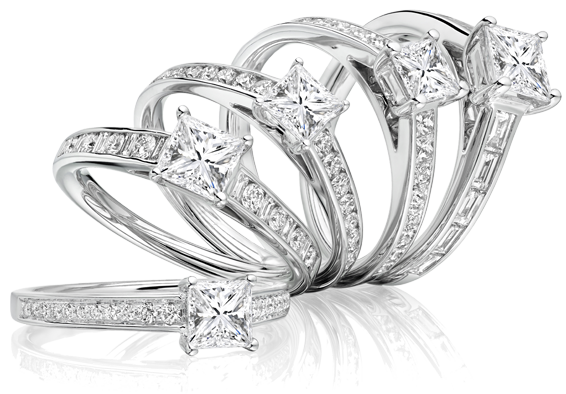
Princess cuts offer a bold and modern look, but because they are square, their diagonal measurement is greater than their width. This can create a slightly smaller face-up area compared to other shapes at the same carat weight. However, the sharp corners and symmetry still appeal to many buyers who love a contemporary style.
When comparing shapes, it is helpful to look at millimeter measurements as well as carat weight. Jewelers often provide these dimensions so buyers can get a sense of how much finger coverage a stone will provide. By considering both the shape and the measurements, you can choose a diamond that delivers the size and visual impact you want while staying within your budget.
Real Examples: Carat Weight vs. Millimeter Size
Looking at real examples helps to illustrate why carat weight alone does not tell the full story. Two diamonds of the same carat weight can have different measurements in millimeters, which directly affects how large they look when worn. For instance, a well-cut one-carat round diamond typically measures about 6.4 millimeters across, while a one-carat oval may be around 8 by 5.5 millimeters. The extra length of the oval creates the impression of a bigger stone, even though both weigh the same.
Pear and marquise diamonds also demonstrate how shape impacts face-up size. A one-carat pear-shaped diamond might measure roughly 8.6 by 5.5 millimeters, and a marquise can reach about 10 by 5 millimeters. These elongated outlines cover more surface area on the finger and can look noticeably larger than a round diamond of the same carat weight. That is why many buyers searching for maximum presence choose these shapes.

Emerald and cushion cuts, in contrast, tend to have smaller measurements for the same carat weight. A one-carat emerald cut may measure only about 7 by 5 millimeters, with more of the weight concentrated below the surface. Cushion cuts are often even more compact. For buyers who prioritize face-up size, understanding these differences is important before making a final choice.
Many jewelers provide carat-to-millimeter charts or side-by-side comparison images to help buyers visualize the true size of each shape and carat weight. Reviewing these examples can prevent surprises and ensure that the diamond you choose matches your expectations. By focusing on both carat weight and millimeter size, you can select a diamond that will make the right impression for your special occasion.
How Setting and Ring Style Change the Perception of Size
The way a diamond is set can make a significant difference in how large it appears on the hand. Certain settings, such as halo or bezel styles, add extra metal or smaller accent stones around the center diamond. A halo setting, which surrounds the main stone with a ring of smaller diamonds, can make the central diamond look up to half a carat larger. This style not only adds sparkle but also creates the illusion of greater size without the extra cost of a higher carat weight.
Band style and thickness also affect perception. A thin or delicate band draws attention to the center stone and makes it look bigger, while a wide or chunky band can make the diamond seem smaller by comparison. Prong settings that lift the diamond above the band allow more light to enter the stone, enhancing brilliance and making the diamond stand out more. The color of the band can matter too, with white metals often emphasizing the diamond’s brightness.
Choosing the right setting and ring style is an effective way to maximize the visual impact of your diamond. By working with a jeweler to find the best combination, you can make a slightly smaller carat weight appear larger and more impressive. Understanding these design tricks ensures you get the most value and satisfaction from your diamond ring.
Carat Weight and Value: What Matters Most for Buyers
Carat weight has a direct impact on a diamond’s price, but it is not the only factor that determines value. As carat weight increases, the price per carat also rises, often in large jumps at popular milestones such as one, one and a half, or two carats. This is because larger diamonds are much rarer in nature, making them more sought after by buyers and collectors. For many, owning a diamond that meets or surpasses these benchmarks is a symbol of status and achievement.

However, focusing only on carat weight can lead to missing out on other important qualities. A diamond’s cut, clarity, and color all play major roles in its beauty and appeal. Sometimes a slightly smaller diamond with excellent cut and clarity will look more brilliant and attractive than a larger stone with visible flaws or a poor cut. The best value is often found by balancing carat weight with these other characteristics, choosing a stone that looks beautiful to the naked eye rather than just relying on the numbers.
Value is also shaped by personal preference and the intended use of the diamond. Some buyers prioritize maximum size, while others look for a unique shape or a rare color. For engagement rings, wearability and comfort may influence the decision, especially for those with active lifestyles. Understanding your priorities and how they align with the characteristics of different diamonds can help you find the best option for your needs and budget.
Smart buyers take time to compare options and consult with experts or use online tools that show real-life images and measurements. This approach ensures that the diamond you choose is not only a sound investment but also a source of lasting satisfaction. In the end, the right diamond is the one that makes you happy, fits your style, and represents the value you are looking for.…




 Do your homework about diamonds which means having the necessary information about the authenticity of a diamond. You should have basic knowledge of the 4Cs that are the most important aspects of any diamond. These 4Cs are Cut, Color,
  Get informed on the pros and cons of particular ring settings. Also be aware that the the ring metal plays a big part in choosing the right diamond color. Sites like
